Are We in an AI Bubble? Understanding the Risks and Opportunities
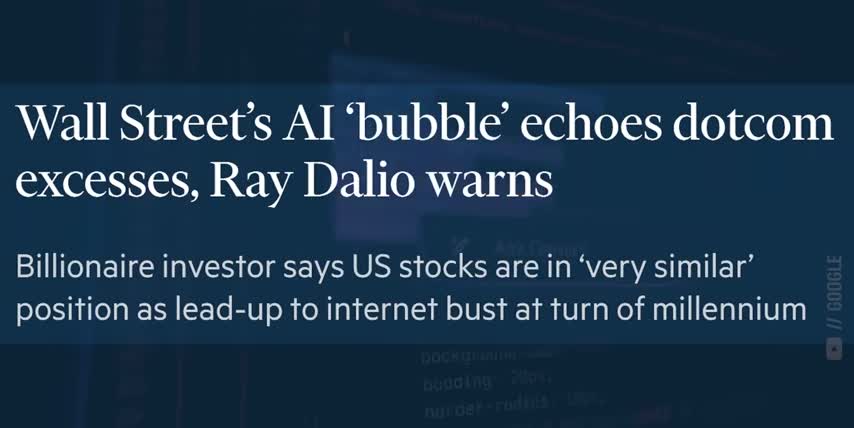
OpenAI CEO Sam Altman recently warned that we’re in an AI bubble, citing the excessive excitement of investors in the AI market. This warning is echoed by other experts, including University of Michigan business professor Eric Gordon, who predicts that investors will suffer more from this AI boom than the dot-com crash. A recent MIT report also revealed that 95% of companies launching AI pilot programs are seeing little to no results.
The AI Bubble: Separating Fact from Hype
Comparing the current AI market to the dot-com bubble of 2000, many experts point to the overhyped internet companies that failed to generate revenues, let alone profits. However, the top AI companies today, such as Nvidia, Google, Microsoft, Amazon, Meta Platforms, and TSMC, have huge revenues and high operating margins. The infrastructure required to compete in the AI market is also significantly more substantial, with millions or even billions of dollars invested in data centers and edge devices.
The demand for AI software and hardware is high, with consumers already using AI in various applications. This is why it’s more accurate to compare the current AI market to the rise of the mobile internet, where companies and consumers were already online, and every website, software, and service transitioned to mobile applications.
Identifying the Real AI Bubble
While some experts warn of an overall AI bubble, the reality is that the bubble is concentrated around specific AI software companies, such as Palantir and CrowdStrike. These companies are trading at high price-to-sales ratios, with slower revenue growth compared to semiconductor companies and hyperscalers like Amazon, Microsoft, and Google.
A case study by Morgan Stanley Research highlights the performance of different stocks during the rise of the mobile internet, categorizing them into three groups: semiconductors, infrastructure, and software and services. Applying this framework to the AI market, it’s clear that semiconductor companies, such as Nvidia and TSMC, are not in a bubble, with strong revenue growth and high operating margins.
Understanding the Risks and Opportunities
To understand the potential risks and opportunities in the AI market, it’s essential to look at historic data. Since 1956, the stock market has seen numerous bull and bear markets, with bull markets lasting around six years and returning over 200% on average. Bear markets, on the other hand, last approximately one year and decline by about 36% on average.
Market corrections, where the market drops between 10% and 20%, are also common, occurring once every three years on average. However, these corrections are typically short-lived, with the market recovering in under six months.
Investment Strategies for the AI Market
Given the current state of the AI market, it’s essential to have a well-thought-out investment strategy. This includes:
- Dollar-cost averaging to reduce the impact of market volatility
- Keeping a cash reserve to take advantage of potential market dips
- Investing in a diversified portfolio of semiconductor companies, hyperscalers, and other AI-related stocks
It’s also crucial to remember that valuation matters, but the quality of the underlying business matters more over time. Investing in great companies at a bad price is often better than investing in a bad company at a great price.
Conclusion
In conclusion, while there are warnings of an AI bubble, the reality is that the bubble is concentrated around specific AI software companies. By understanding the historic data and the current state of the AI market, investors can make informed decisions and develop a strategy that works for them. Whether you’re a seasoned investor or just starting out, it’s essential to stay informed and adapt to the ever-changing landscape of the AI market.

Leave a Reply