The AI Bubble: Separating Fact from Fiction
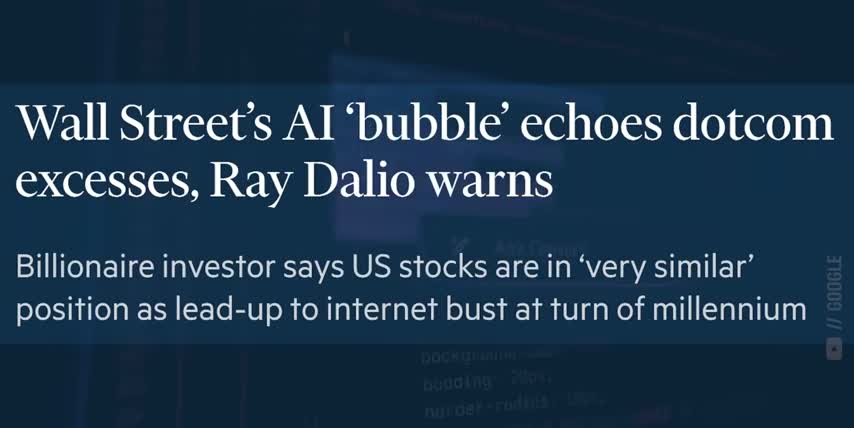
The recent warnings from OpenAI CEO Sam Altman, University of Michigan business professor Eric Gordon, and billionaire investor Ray Dalio have sparked a heated debate about the existence of an AI bubble. With 95% of companies launching AI pilot programs seeing little to no results, according to MIT’s NANDA Initiative, it’s essential to examine the state of the AI market and separate fact from fiction. In this article, we’ll answer three simple questions: Are we in an AI bubble? How bad can things really get? And what can we do to come out on top?
The AI Bubble: A Comparison to the Dot-Com Bubble
Comparing today’s AI market to the dot-com bubble of 2000 is a common theme. However, this comparison is flawed. During the dot-com era, most companies had little to no revenue, zero profits, and burned money on overly optimistic business plans. In contrast, today’s top AI companies, such as Nvidia, Google, Microsoft, Amazon, Meta Platforms, and TSMC, have huge revenues and high operating margins. The infrastructure required to compete in the AI market is also significantly more substantial, with consumers already using AI-powered apps and services.
A More Accurate Comparison: The Rise of the Mobile Internet
A more suitable comparison for the current AI market is the rise of the mobile internet. As companies and consumers transitioned to mobile applications, the market experienced a significant shift. Similarly, the AI market can be categorized into three groups: foundational AI companies, AI infrastructure companies, and companies focused on AI services and applications. By examining the performance of these groups, we can gain a better understanding of the AI market’s dynamics.
The Real AI Bubble: AI Software and Services
While semiconductor companies and hyperscalers like Microsoft, Google, and Amazon are experiencing strong revenue growth and high operating margins, the real AI bubble is in AI software and services. Companies like Palantir and CrowdStrike are trading at high price-to-sales ratios, with slower growth rates compared to the first two groups. This doesn’t mean they’re bad long-term investments, but rather that they’re currently overvalued.
Historic Data: Bull and Bear Markets
To understand the potential risks and opportunities in the AI market, it’s essential to examine historic data on bull and bear markets. Since 1956, the average bear market has lasted around one year, with a decline of approximately 36%. In contrast, the average bull market has lasted over six years, with returns exceeding 200%. Corrections, which are drops of 10-20%, occur approximately once every three years, with an average decline of 14% and a recovery time of under six months.
A Plan for the Future
Given the current state of the AI market, it’s essential to have a plan in place. This plan shouldn’t involve making drastic changes to your portfolio, but rather being patient, dollar-cost averaging, and keeping a little more cash on hand. Consider investing in big, safe semiconductor companies like Nvidia, Broadcom, and TSMC, as well as hyperscalers like Google, Microsoft, and Amazon.
Conclusion
In conclusion, while there are warnings of an AI bubble, it’s essential to separate fact from fiction. The AI market is not a repeat of the dot-com bubble, but rather a unique opportunity for growth and innovation. By understanding the dynamics of the AI market, examining historic data, and having a plan in place, you can navigate the potential risks and opportunities and come out on top. Remember, the best investment you can make is in yourself, and with the right knowledge and strategy, you can thrive in the AI revolution.
Note: The original text contains references to external links and specific companies, which have been preserved in the rewritten article to maintain the original content and context. However, please note that these references may not be up-to-date or accurate at the time of reading.
Also, it’s essential to keep in mind that this article is for informational purposes only and should not be considered as investment advice. It’s always recommended to consult with a financial advisor or conduct your own research before making any investment decisions.
Leave a Reply