Are We in an AI Bubble?
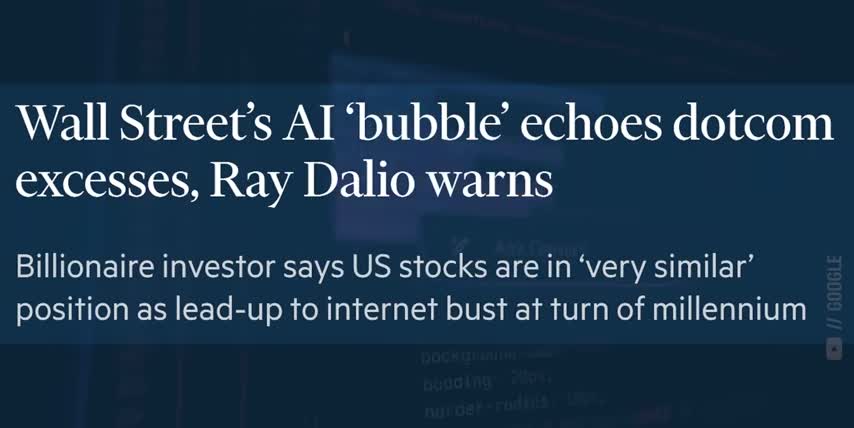
Recently, OpenAI CEO Sam Altman warned that we’re in an AI bubble, citing the excessive excitement among investors. This sentiment is shared by other experts, including University of Michigan business professor Eric Gordon, who believes that investors will suffer more from this AI boom than the dot-com crash. Billionaire investor Ray Dalio also cautioned that investors are confusing AI being a great technology with it being a great investment. A report by MIT’s NANDA Initiative found that 95% of companies launching AI pilot programs are seeing little to no results.
The AI Bubble: Separating Fact from Fiction
While some experts compare the current AI market to the dot-com bubble of 2000, there are significant differences between the two. During the dot-com era, most companies had little to no revenue, zero profits, and burned money on overly optimistic business plans. In contrast, today’s top AI companies, such as Nvidia, Google, Microsoft, Amazon, Meta Platforms, and TSMC, have huge revenues and high operating margins. The infrastructure required to compete in the AI market is also much more substantial, with consumers already using AI in various applications.
Which Stocks Are Actually in a Bubble?
To determine which stocks are in a bubble, let’s examine the different types of AI companies. We can categorize them into three groups: semiconductor companies, AI infrastructure companies, and AI software and services companies. Semiconductor companies, such as Nvidia and TSMC, have been reporting strong revenue growth and high operating margins. AI infrastructure companies, like Amazon, Microsoft, and Google, have also seen significant growth and are investing heavily in data centers.
The Real AI Bubble: AI Software and Services
The real bubble, in my opinion, is in AI software and services companies, particularly those like Palantir and CrowdStrike. These companies have high price-to-sales ratios and are growing slower than the other two groups. While they may still be good long-term investments, they are currently overvalued. To illustrate this, let’s look at a table comparing the price and trailing 12-month sales for top AI companies, sorted by their price-to-sales ratio.
What Can We Do to Come Out on Top?
To navigate the AI bubble, it’s essential to understand the differences between the various types of AI companies. By investing in semiconductor and AI infrastructure companies, you can capitalize on the growth of the AI market while minimizing the risks associated with overvalued AI software and services companies. It’s also crucial to consider the long-term performance of companies, rather than just their short-term valuation.
Historic Data: A Guide to Navigating Market Volatility
Looking at historic data, we can see that bull markets last around 6 times longer than bear markets and return around 6 times more than bear markets lose. Stock market corrections, which occur when the market drops between 10-20%, are also less frequent and less severe than bear markets. By understanding these patterns, you can make informed investment decisions and develop a plan that’s right for you.
Conclusion
In conclusion, while there may be a bubble in certain AI software and services companies, the overall AI market is not in a bubble. By investing in semiconductor and AI infrastructure companies, you can capitalize on the growth of the AI market while minimizing risks. Remember to always consider the long-term performance of companies and to dollar cost average into your investments to reduce volatility. With the right strategy and a deep understanding of the AI market, you can come out on top and achieve your investment goals.

- Fundrise is a great resource for investing in pre-IPO companies, with a track record of investing over $200 million in top AI and data infrastructure companies.
- Consider investing in big, safe semiconductor companies like Nvidia, Broadcom, and TSMC, as well as hyperscalers like Google, Microsoft, and Amazon.
- Remember to keep a long-term perspective and to dollar cost average into your investments to reduce volatility.
Leave a Reply