Escalating Tensions in the Middle East: A Growing Concern for Global Oil Supply
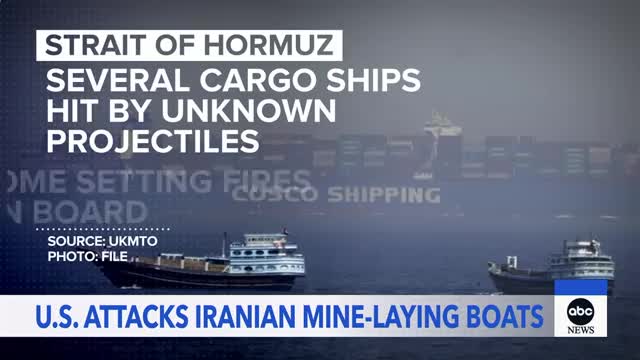
The United States has released new video footage of strikes on Iranian naval ships, claiming to have destroyed 16 mine-laying vessels near the critical Strait of Hormuz. This development comes as several cargo ships in the strait have been hit by unknown projectiles, according to the British Maritime Authority, with some reportedly catching fire. The situation is further complicated by growing concerns over the region’s oil supply and reports that Iran is planning to use mines to disrupt the flow of oil.
President Trump’s Warning and the Escalation of the Conflict
President Trump has warned that the military consequences of mining the strait would be at a level never seen before. The new attacks come on what the U.S. promised would be the most intense day of the war so far, with the most fighters, bombers, and strikes. The conflict has already resulted in a significant increase in the death toll, with over 1,200 reported fatalities. The situation on the ground is dire, with scenes of destruction across the country and thousands attending the funerals of top Iranian commanders killed in the first wave of the war.
The War’s Second Front: Israel’s Attacks on Iranian-Backed Hezbollah
Concerns are growing over the war’s second major front, as Israel intensifies its attacks on Iranian-backed Hezbollah in Lebanon. Overnight, Israel launched over a dozen strikes, including one in the capital, Beirut. The precision strike in the residential heart of Beirut wounded at least four people and caused significant damage. The Israeli military is ramping up attacks across the country, raising concerns about the escalating conflict.
The Human Cost of the Conflict
The toll on American service personnel is becoming clearer, with the Pentagon revealing that at least 140 U.S. service members have been injured so far, including eight who were severely wounded. One of the survivors of the Iranian strike that killed six U.S. troops in Kuwait is speaking out for the first time. 37-year-old Minnesota Army Sergeant First Class Corey Hicks is recovering from severe shrapnel injuries at Walter Reed and described the moment a deadly drone came crashing in.
Hicks remembered the moment the drone struck, saying, “I kind of looked around and I saw everything was just smoke and fire and crazy and chaos.” He also remembered one of the service members who didn’t survive, Master Sergeant Nicole Amour, saying, “She was literally five feet from me when that happened. When I looked over my left shoulder, the drone impacted basically right above her. She was just the kindest, kindest woman ever.”
Regime Change and the Future of Iran
With President Trump calling Iran’s new Supreme Leader unacceptable, Israeli Prime Minister Netanyahu is openly calling for regime change, saying to Iranians, “be ready to seize the moment.” However, Iran’s chief of police has warned that if people do take to the streets and protest, “we will do what we did to the enemy, our hand is on the trigger.” These chilling words highlight the uncertainty and danger of the situation, as the world watches the escalating conflict in the Middle East.
Conclusion
The situation in the Middle East is rapidly escalating, with the conflict between the U.S., Israel, and Iran showing no signs of abating. The growing concern over the region’s oil supply and the increasing death toll are just a few of the many factors that make this situation so critical. As the world waits to see what will happen next, one thing is clear: the stakes are high, and the consequences of this conflict will be far-reaching.
Leave a Reply