An exceptionally brutal day on Wall Street. Software names getting hit again today after the sell-off yesterday amid these fears of AI disrupting the industry. Software stocks are seeing one of their worst declines in recent history, but almost no one is explaining the real reason why, which is crazy because what’s happening right now will reshape our lives over the next few years, especially if you own any software stocks or your job involves a computer. This isn’t just another tech stock sell-off. It’s a massive shift that will make some investors very rich and crush the portfolios of everyone who chose to ignore it. So in this video, I’ll walk you through the SaaSpocalypse, the agentic AI breakthroughs that triggered it, and where to invest to get rich without getting lucky.
Table of Contents
1. Introduction to SaaSpocalypse
1.1 Agentic AI Breakthroughs
2. Impact on Software Stocks
2.1 Companies at Risk
2.2 Companies Set to Win
3. Investing in AI
3.1 Semiconductors
3.2 AI Infrastructure
4. Key Takeaways
Your time is valuable, so let’s get right into it. First things first, it’s totally normal to feel anxious if you’re watching your stocks get hammered while the mainstream media says that software is dead. But this is exactly the kind of moment that creates huge opportunities for investors who slow down, take the time to understand what’s happening, and make moves based on facts and data while the rest of the market panics. That’s exactly what this video will help you do. And I’ll break it down into four parts.
First, what actually triggered this meltdown in software stocks? Second, which companies are the most at risk? Third, how bad things could actually get for them? And finally, which stocks are set to win big as a result? But let’s start with what’s causing software stocks to crash in the first place. On January 30th, Anthropic quietly shipped a legal plugin for Claude Cowork, which is essentially a 200-line open-source text file that tells Claude how to review contracts, analyze non-disclosure agreements, compare clauses according to a legal playbook, and draft compliance summaries.
Basically, this free prompt and workflow does the kind of routine legal work that law firms usually hand to junior associates and paralegals that use giant and inexpensive online platforms for research like Westlaw and LexisNexis. Within days of this Claude plugin going live, software as a service stocks collectively lost almost $300 billion in market cap, including companies that many of us use and invest in, like Adobe, Salesforce, ServiceNow, HubSpot, and Intuit, which is why this sell-off is being called the SaaSpocalypse. But here’s what actually changed, and this is the part that almost everyone is missing.

After this plugin and other AI agents showed that they could chew through routine document work, KPMG, which is one of the big four global accounting firms for many of the world’s largest companies, turned around and told their own auditor, Grant Thornton UK, that if AI is making audits cheaper and faster, they shouldn’t be paying 2024 prices anymore. And if it isn’t, they’ll find a firm where it is. So KPMG explicitly used AI as leverage and enforced a 14% cut on their six-figure auditing fees overnight. This dynamic is about to repeat everywhere, because once a client can point to an AI workflow that clearly reduces time and people needed for a service, they won’t just renegotiate that new AI add-on. They’ll renegotiate the entire core contract.
And that’s where the classic pay-per-software seat and pay-per-billable-hour model really starts to break. And that’s just the beginning, because agentic AI workflows have made some massive breakthroughs in just the last few weeks. First, AI agents aren’t just fixing typos in code anymore. They’re shipping serious, production-grade software on their own. Anthropic ran an experiment where they spun up a swarm of 16 Claude Opus 4.6 AI agents, pointed them at a blank codebase, and told them to build a C compiler in Rust, which is a core piece of critical software.

Over about two weeks, those agents wrote around a hundred thousand lines of code that can run a mainstream operating system, handle popular real world apps like databases and video tools, and passes almost all the standard stress tests that you’d expect from some serious infrastructure software, all for only around $20,000 in AI spend. This would have taken a human team around a year and cost over a million dollars once you include benefits, management overhead, and so on. The key to making this all possible is something called needle in a haystack retrieval. Opus 4.6 can scan a million tokens of text and still pull out the right snippet about 76% of the time, which is roughly three times better than the next best model.
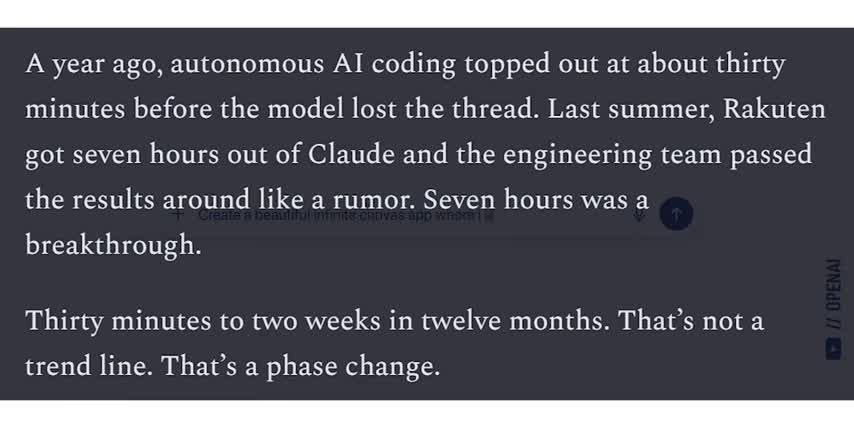
In plain English, it can hold around 50,000 lines of code in its head and reason about how all the pieces fit together, the way a senior engineer who built the system from day one would, not like a new developer skimming through it for the first time Just one year ago getting an AI model to code for 30 minutes without falling apart was impressive Now we have swarms of AI agents running for two weeks straight and doing work that you’d normally hire a whole team of senior systems engineers for. And once that’s possible, SaaS companies charging premium prices just to support their massive headcounts starts to look a lot less attractive.
According to MarketUS, the global artificial intelligence market is expected to almost 19x in size over the next nine years, which is a compound annual growth rate of 38.5% through 2034. But many of the companies building next-generation AI applications are not publicly traded. Think about the 90s and early 2000s. Companies like Amazon and Google went public very early in their growth cycle, but today, they’re waiting an average of 10 years or longer to go public.
That means investors like us can miss out on most of the returns from the next amazon, the next google, the next nvidia, that’s where fundrise comes in, the sponsor of this video, their venture capital product lets you invest in some of the best tech companies before they go public.
Most software as a service companies are built on three big assumptions. You bundle a bunch of commoditized features behind a slick interface, you charge per human seat and you grow by adding more users, not by radically increasing the value per user. AI agents attack all three of these assumptions. One agent can do the work of several people, or at least centralize their work into a tool, so that customers need fewer seats.
AI agents can recreate many generic workflows in-house, so companies won’t pay for every little feature from third-party vendors. And of course, businesses can keep adding more of their own logic directly into those agentic workflows over time, instead of buying yet another app. That’s why software valuations are compressing. It’s not that software is suddenly useless, it’s that the market no longer believes in the pay per seat pricing model. So, the companies most at risk are the ones focused on lots of basic features, connected by a nice UI that charge per seat.

The companies not at serious risk are the ones where the work itself actually happens, or where the files and the ecosystem actually live on their platform. For example, Adobe’s creative stack, where Photoshop, Premiere, and Firefly sit at the center of how brands actually make their images, their video assets, and their marketing content, and where generative AI is being wired directly into those workflows instead of competing with them.
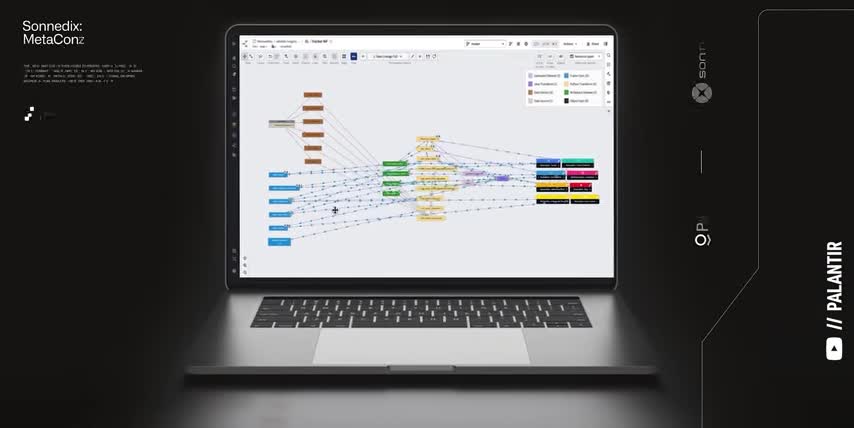
Or Figma, which isn’t just a design app, it’s a multiplayer whiteboard for entire product teams with live collaboration, shared design systems, and a massive ecosystem of plugins and integrations, making it the place where product decisions get made. Or companies like Palantir, whose foundry and AIP platforms act as real-time systems of record for an enterprise’s operational data, and specifically are built to host and control AI agents, not be replaced by them. Said another way, these are the tools where real work happens, where the content and the data are created and edited, and where agents are actually able to interact with the business. So AI tends to make these platforms more useful, not less.
Exactly the kinds of companies that benefit big time from breakthroughs in agentic AI Semiconductors are the chips that every serious AI agent ultimately runs on If companies start replacing seats and billable hours with agents these chips will be in even higher demand Nvidia is still the default choice for AI training and inference with over a 90 share of the data center GPU market. Chip architectures like Hopper, Blackwell, and Rubin, plus the networking and software stack that comes with them, make it very hard for enterprises to switch away from Nvidia. As agent swarms scale from pilot projects to 24-7 production, Nvidia will be one of the biggest beneficiaries of every AI workload. AMD is the main alternative to NVIDIA for GPUs.
If cloud providers want pricing power and a second source for their supply chains, AMD is where they’ll go. Broadcom, ticker symbol AVGO, focuses less on GPUs and more on everything around them. From high-speed networking chips and custom ASICs, to the specialized switches that tie racks of chips together in dense AI clusters. As agentic workloads get more distributed and bound by network speeds, Broadcom will benefit because they sell the data center switch chips that remove those bottlenecks. Another bottleneck is memory. AI agents need high bandwidth memory on GPUs and huge pools of DRAM at the blade and rack levels. Companies like Samsung, SK Hynix, and Micron directly benefit from the explosion in demand for advanced memory.
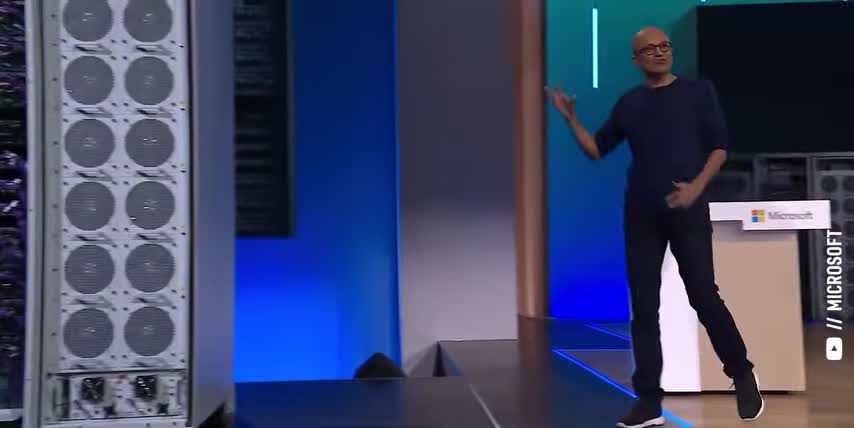
And of course, the Taiwan Semiconductor Manufacturing Company, ticker symbol TSM, is the foundry that manufactures chips for Nvidia, AMD and Broadcom. So it doesn’t really matter which chip designer wins in this SaaS apocalypse, since TSMC will be the one making their chips anyway, as well as the chips for hyperscalers like Amazon, Microsoft and Google. As far as AI infrastructure goes, Amazon, Microsoft and Google all win for the same reason. They’re where AI agents actually run. These three companies control almost two-thirds of the world’s cloud infrastructure and each company has its own agentic stack on top bedrock on aws azure ai and openai for microsoft and gemini and vertex for google so every time a company replaces a sas tool with an agent that extra compute storage and networking spend shows up in these cloud services companies like coreweave nebius and iren are the smaller and more volatile versions of that same theme they’re building ai-focused data centers and renting out GPU time to model builders, enterprises, and hyperscalers that need extra capacity.

Coreweave is a pure play and NVIDIA backed AI data center operator. Nebius is scaling dedicated AI clouds for governments and regulated industries. And iREN is turning its massive power contracts into dense AI compute clusters. These companies are much more concentrated bets than the hyperscalers, so make sure to check out my previous videos covering their upsides and risks. Vertiv, ticker symbol VRT, sells the picks and shovels of the data center itself. Power systems, cooling racks, and other critical hardware that lets hyperscalers, neoclouds, and big enterprises physically set up those dense AI clusters. As racks get hotter and more power hungry thanks to GPUs and ASICs, Vertiv plays a more central role in bringing them all online.
Key Takeaways
- The SaaSpocalypse is a massive shift in the software industry caused by agentic AI breakthroughs.
- AI agents are replacing human workers in many industries, making some software companies less attractive.
- Companies that provide tools for real work, content creation, and data editing are more likely to benefit from AI.
- Semiconductors, AI infrastructure, and AI-focused software platforms are areas to invest in.
- Nvidia, AMD, and TSMC are key players in the semiconductor industry.
CrowdStrike’s Charlotte AI and agentic features become more important in a world where fleets of agents are talking to sensitive systems and datasets around the clock instead of human users that stop working at 5pm. Hopefully, this video helped you understand what’s really driving the SaaS-pocalypse, beyond all the clickbait headlines, and why hyperscalers are willing to spend hundreds of billions of dollars on AI infrastructure. Agentic AI is not just another hype cycle. It’s a structural shift that will make some investors rich and crush the portfolios of people who choose to ignore what’s happening. If you made it this far into the video, it’s pretty clear which side of that line you’re on.
And if you want to see what else I’m investing in to get rich without getting lucky, check out this video next. Either way, thanks for watching and until next time, this is Ticker Symbol U. My name is Alex, reminding you that the best investment you can make is in you.
Frequently Asked Questions
What is the SaaSpocalypse?
The SaaSpocalypse refers to the significant decline in the value of software as a service (SaaS) companies due to the disruption caused by agentic AI.
What are agentic AI breakthroughs?
Agentic AI breakthroughs refer to the recent advancements in artificial intelligence that enable AI agents to perform tasks that were previously done by humans, such as coding, auditing, and security research.
Which companies are most at risk due to the SaaSpocalypse?
Companies that provide generic features, charge per seat, and have a high reliance on human workers are most at risk. Examples include Salesforce, ServiceNow, and HubSpot.
Which companies are set to win from the SaaSpocalypse?
Companies that provide tools for real work, content creation, and data editing, such as Adobe, Figma, and Palantir, are more likely to benefit from the SaaSpocalypse.
What are the key areas to invest in due to the SaaSpocalypse?
Semiconductors, AI infrastructure, and AI-focused software platforms are areas to invest in due to the SaaSpocalypse.
| Company | Industry | Potential Impact |
|---|---|---|
| Nvidia | Semiconductors | High demand for AI chips |
| AMD | Semiconductors | Alternative to Nvidia |
| TSMC | Semiconductors | Manufactures chips for major companies |
| Amazon | AI Infrastructure | Provides cloud services for AI |
| Microsoft | AI Infrastructure | Provides cloud services for AI |
| AI Infrastructure | Provides cloud services for AI |
Artificial intelligence is the future of technology, and those who invest in it will be the ones who shape the future. – Alex, Ticker Symbol U
Alex, Ticker Symbol U
According to MarketWatch, the global artificial intelligence market is expected to continue growing in the coming years.
Leave a Reply